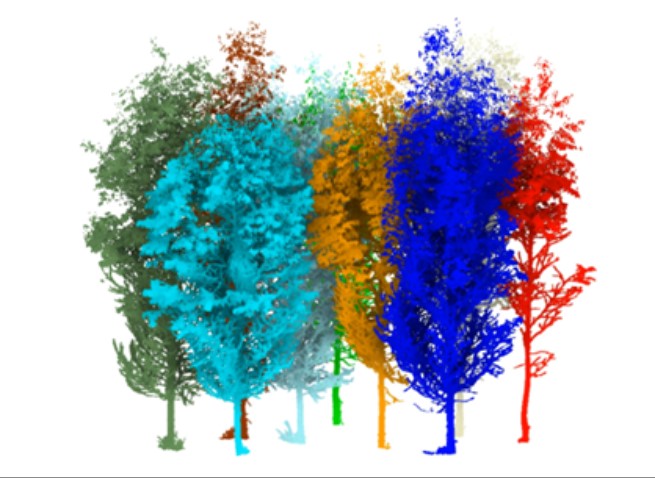

As drought events intensify under global climate change, understanding how trees survive and adjust under water-limited conditions is becoming increasingly important. Eucalyptus, with over 800 species distributed across diverse climates, offers an ideal system for investigating drought responses through physiological and morphological flexibility—also known as trait plasticity.
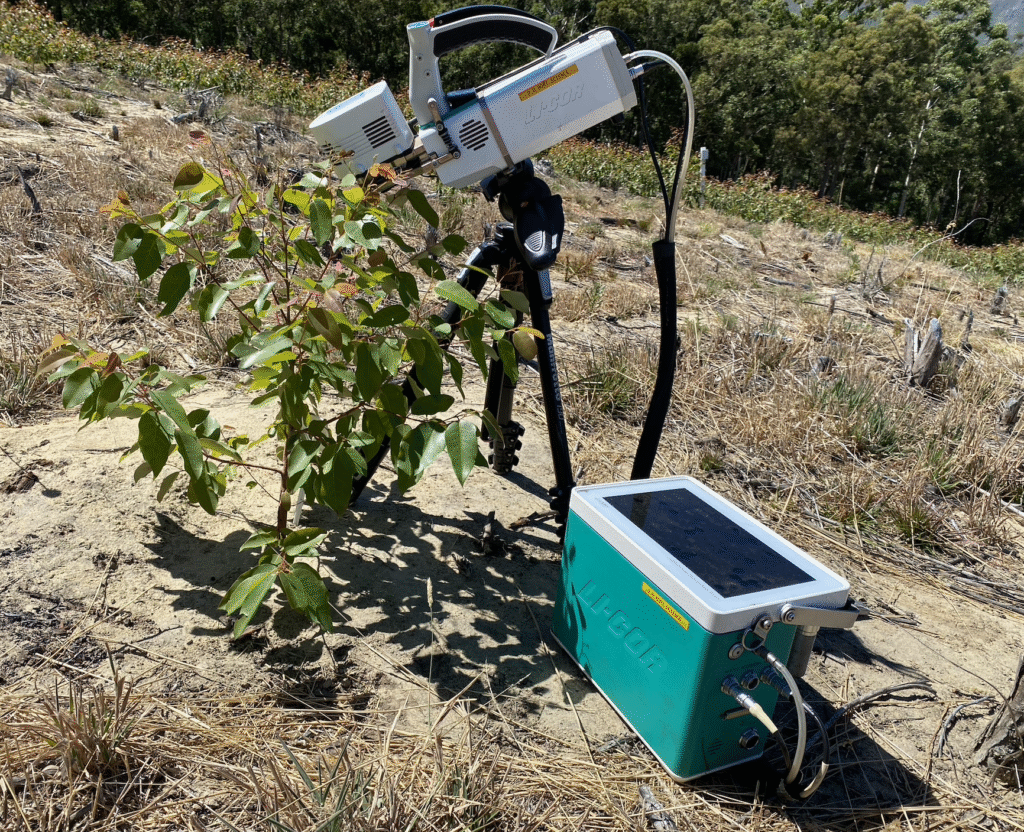
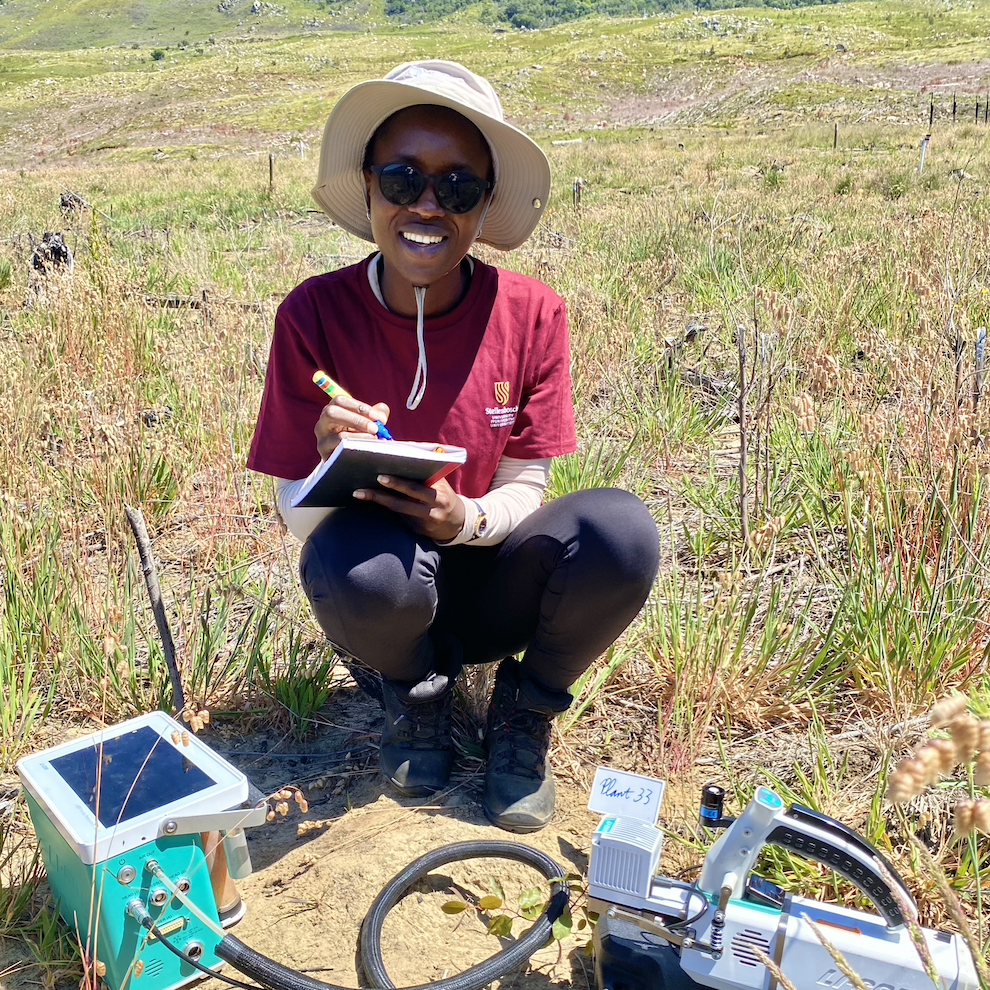
Dr. Edith Singini’s research, supervised by Prof. Dave Drew, examines how physiological trait plasticity underpins drought resilience in Eucalyptus across multiple environments and experimental scales. Her work integrates a systematic review and meta-analysis, a rainfall pulse study conducted under natural field conditions, controlled soil dry-down experiments, and a stand-density drought trial to address long-standing gaps in our understanding of tree drought responses.
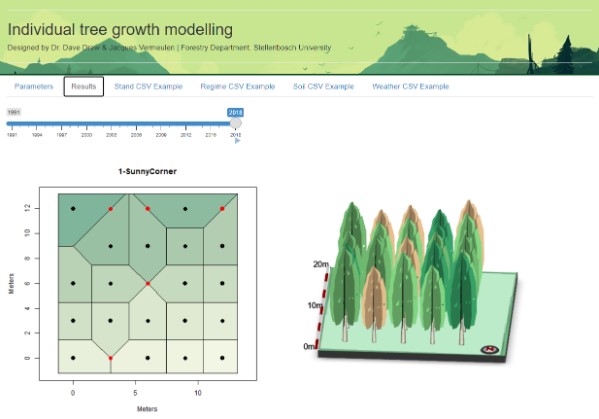
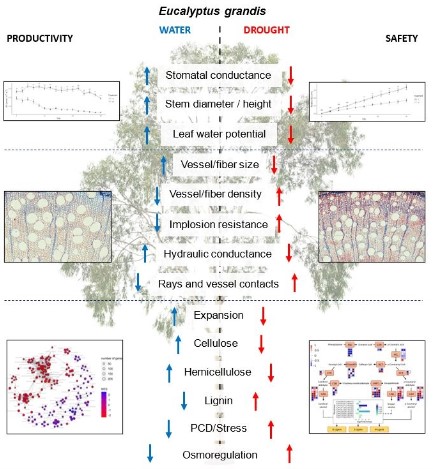
Findings show that potted and binary (wet vs. dry) experiments tend to exaggerate drought effects when compared to field studies. Long-term dry-down experiments reveal that many Eucalyptus species possess hidden acclimation capacities, with aspects of physiological plasticity often not fully captured in simplified experimental setups. Results indicate that drought responses are species-specific yet coordinated across traits. Measurements of midday water potential proved particularly effective at distinguishing species differences during peak drought stress. Stand density plays a key role in shaping drought sensitivity. Denser stands exhibit stronger physiological divergence under stress, but these differences lessen after rainfall recovery—suggesting that Eucalyptus trees can realign their physiological performance once rehydrated.
Together, these studies advance understanding of how species origin, stand density, and experimental design interact to influence physiological trait plasticity. By linking water-use thresholds with drought resilience, Dr. Singini’s work contributes to improved stand-spacing guidelines, species-selection strategies, and climate-resilient forestry practices.
Her research highlights the importance of field-based, multi-species, long-term experiments for accurately capturing real-world ecological dynamics under a changing climate