From 8–11 September 2026, Stellenbosch University hosted the 9th International Scientific Conference on Hardwood Products (ISCHP26), together with the IUFRO Wood Quality Modelling Working Party (IUFRO 5.01.04). The conference brought together researchers working across hardwood products, wood quality, forestry, processing, modelling and related fields from around the world. Read more about ISCHP26.

For EucXylo, the conference was a valuable opportunity to bring together many members of our team and share the breadth of research taking place within the programme. EucXylo is focused on understanding and modelling how eucalypts grow and form wood, combining detailed measurements of tree growth, physiology and wood properties with modelling approaches across different scales. Learn more about EucXylo.

Sharing research across disciplines
EucXylo was well represented throughout the conference, with Stacey Marinus, Jacques Vermeulen, Erin Ramsay, Athini Buqa and Peaceful Ntshangase participating alongside Dr Isáira Leite e Lopes and Prof David Drew.
Dr. Isáira Leite e Lopes and Prof. Drew delivered presentations, while several of our students shared their research through poster presentations. Their work reflects the broad range of questions being explored within EucXylo, from tree physiology and drought responses to soil processes, growth, wood formation and forest monitoring.

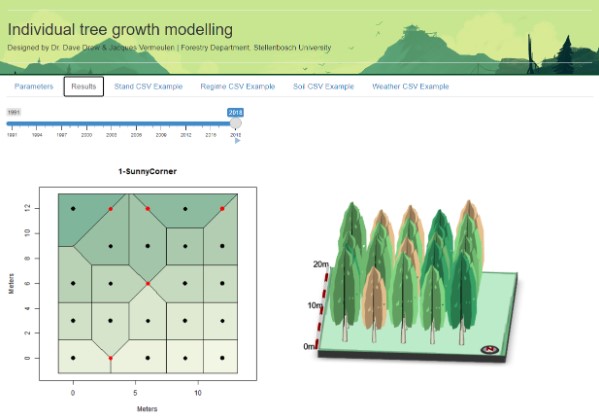
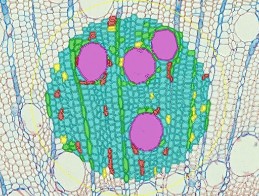
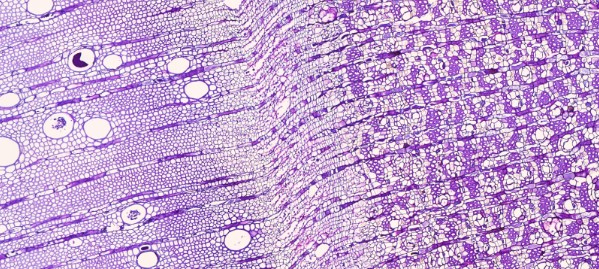
This breadth reflects the integrated approach of the programme. At EucXylo, research spans from cambial dynamics and xylogenesis and tree-level ecophysiology to stand-level growth, remote sensing and predictive modelling. These different areas allow us to examine wood formation not as an isolated process, but as part of the wider functioning of the tree and its environment.
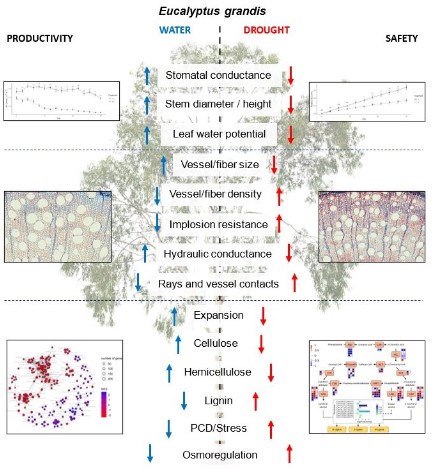
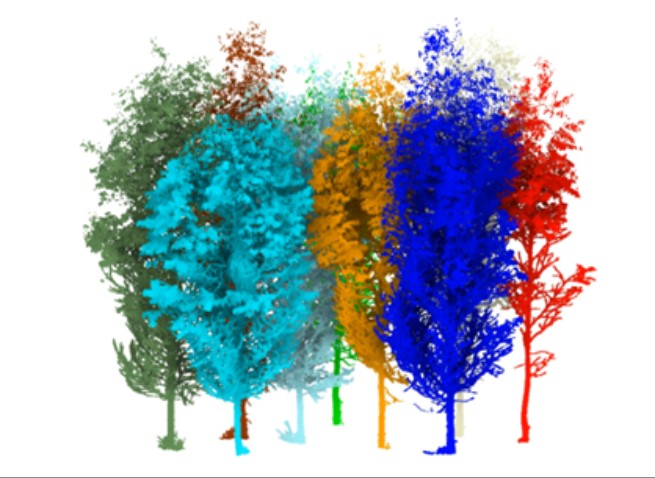
Our recent publications demonstrate this range, including research on drought responses in Eucalyptus, terrestrial LiDAR and canopy architecture, soil biological activity, rainfall-driven recovery of water relations and photosynthesis, and low-cost technologies for monitoring tree growth.
From research questions to the forest
One of the highlights of the conference was the opportunity to connect discussions in the conference room with the research taking place at the IMPACT Open-Air Lab.
The IMPACT OAL is EucXylo’s long-term research plantation near Somerset West, where we monitor Eucalyptus trees from root to canopy under different levels of competition. The site combines environmental and growth sensors, Internet of Things technology, terrestrial laser scanning, remote sensing and detailed physiological measurements to build a long-term picture of how trees respond to their environment.

The site also provides an important space for collaboration. During ISCHP26, students had the opportunity to present their research through posters at the IMPACT OAL, allowing conference participants to engage with the work in the environment where much of it is being conducted.
For our students in particular, this created an opportunity to move beyond presenting a research project on paper. They could discuss their questions, methods and findings directly with fellow researchers, academics and professionals from across the forestry and wood science community.
The value of meeting fellow researchers
While conferences are ultimately about sharing research, some of the most valuable outcomes come from the conversations around that research.
ISCHP26 brought together researchers from universities, research organisations and industry across different countries and disciplines. Conversations around wood quality, forest management, modelling, processing and products highlighted the many connections between questions that are often investigated separately.
For the EucXylo team, it was an opportunity to learn from researchers working in different parts of the field, receive feedback on our own work, meet new collaborators and introduce our students to the wider research community.
The conference also provided an opportunity to strengthen existing relationships and explore new possibilities for collaboration, an important part of building research that extends beyond individual projects and institutions.
We are grateful to the ISCHP26 organising committee and everyone who contributed to creating a space for researchers, students and industry partners to exchange ideas and build connections around the future of hardwood research.